Earthquake Retrofit Cost in Salt Lake City (2026): Wasatch Fault Guide
May 13, 2026
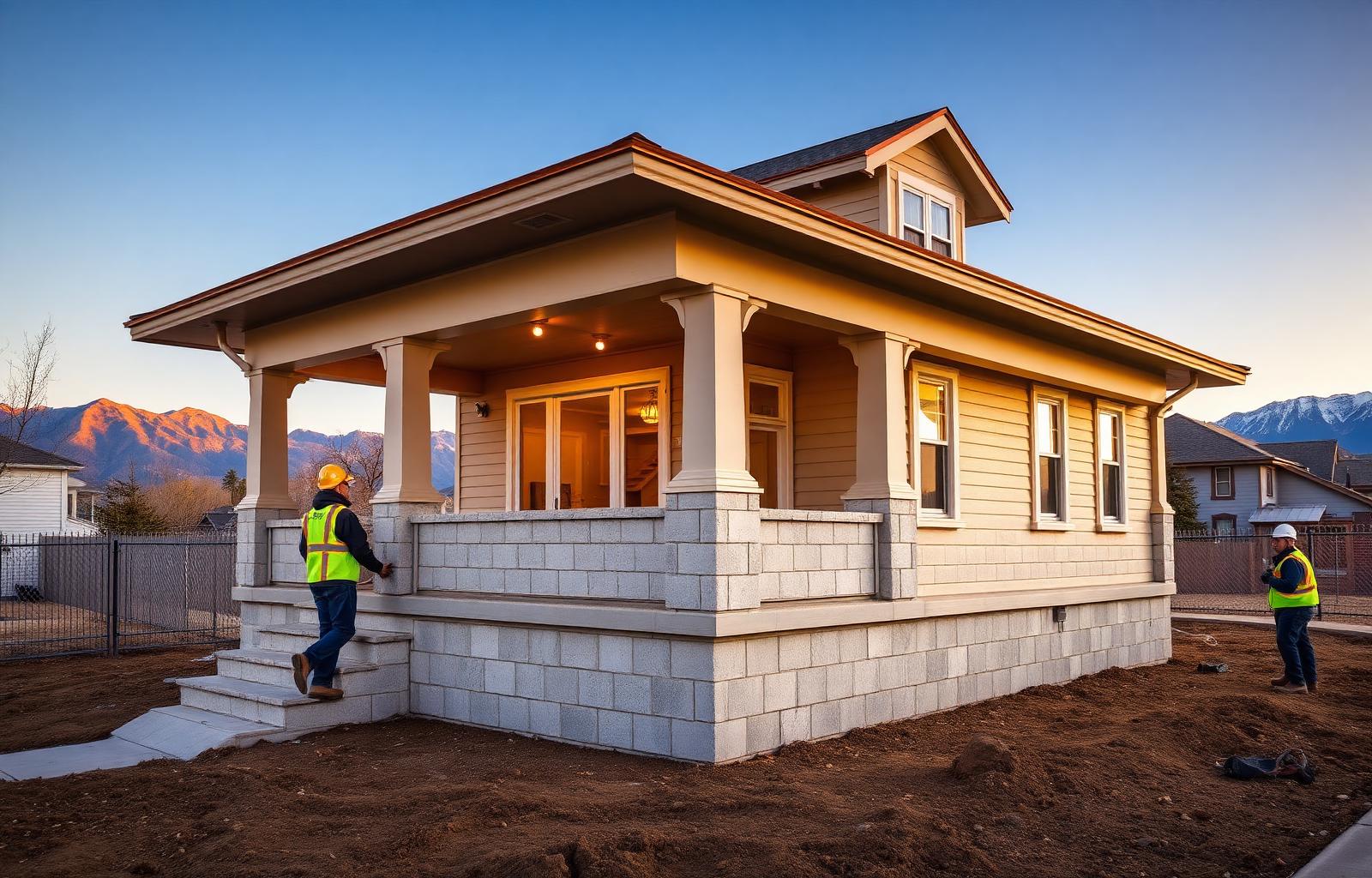
If you own a home in Salt Lake City built before 1980, there's a real chance the framing is not bolted to the foundation. The 2020 Magna earthquake (M5.7) was a small reminder of what the Wasatch Fault is capable of — and the USGS gives a roughly 43% probability of a magnitude 6.75+ rupture along the Wasatch Front in the next 50 years.
A seismic retrofit is the single highest-ROI safety upgrade most older Utah homes can receive. Here's what it actually costs in 2026 — and what we do as a licensed Utah contractor on every retrofit project.
What is an earthquake retrofit?
A residential seismic retrofit is a structural upgrade that ties your house together so it stays on its foundation during shaking. For a typical Salt Lake bungalow or 1950s rambler, that means three things:
- Foundation bolting — anchoring the wood sill plate to the concrete foundation with epoxy-set or expansion bolts every 4–6 feet.
- Cripple wall bracing — adding plywood shear panels to the short stud walls between your foundation and first floor (the most common collapse point in Utah homes).
- Hold-downs and shear transfer — connecting the floor framing to the braced cripple walls so the load path actually works.
For two-story homes and homes with no cripple wall (slab-on-grade), we evaluate portal frames, shear wall additions, and chimney bracing instead.
Earthquake retrofit cost in Salt Lake City — 2026 pricing
Prices below assume a standard single-family home in Salt Lake County, accessible crawlspace, and FEMA P-50 / IEBC Appendix A4 scope of work.
| Home type | Typical scope | 2026 cost |
|---|---|---|
| Small bungalow (under 1,500 sq ft, easy crawlspace) | Bolting + 8–12 cripple panels | $4,800 – $8,500 |
| Standard rambler (1,500–2,500 sq ft) | Full bolting + cripple bracing + hold-downs | $8,500 – $14,000 |
| Two-story or larger | Add portal frames, more shear panels | $14,000 – $22,000 |
| Tight crawlspace / brick veneer / chimney work | Add $2,000–$6,000 | +$2,000 – $6,000 |
| Engineered design (custom homes, hillside) | Stamped engineer drawings | +$1,500 – $4,000 |
Most Avenues, Sugar House, Rose Park, and Holladay homes built between 1900 and 1979 fall into the $8,500–$14,000 range.
What drives the price up
- Crawlspace access: a 24" tall crawlspace is easy. An 18" crawlspace can double labor hours.
- Brick veneer or unreinforced masonry: URM homes often need additional anchoring of the brick to the wood frame.
- Chimney bracing: a tall unreinforced chimney is the #1 falling-object hazard. Bracing or removal runs $2,000–$8,000.
- Stucco walls: stucco hides nailing patterns and adds inspection time.
- Engineering: required for hillside lots, two-story homes, or anything outside the IEBC A4 prescriptive standard.
Permits and inspections in Salt Lake City
A retrofit done to IEBC Appendix Chapter A4 can be permitted as a prescriptive plan-set (no engineer required) for most homes. Salt Lake City's permit fee for a simple retrofit is roughly $250–$500, with one framing inspection before close-up.
For homes outside the prescriptive scope, a Utah-licensed structural engineer must stamp the drawings — adding 2–4 weeks and the engineering fee above.
Insurance discounts (this is the part most homeowners miss)
Several Utah insurers — including the Utah-administered Utah Earthquake Authority pool and major carriers like State Farm and Farmers — offer 5–25% premium discounts on earthquake coverage when a home has a documented retrofit. On a $400,000 home with EQ coverage, that's often $300–$700/year back in your pocket.
Always ask your agent for the specific retrofit documentation they require (typically permit, final inspection card, and a signed contractor letter).
DIY vs. hiring a contractor
Foundation bolting alone can be DIY for a handy homeowner — but two things almost always require a licensed contractor in Utah:
- Permits: Salt Lake City requires a licensed contractor or owner-occupant for the permit application, and inspectors are strict on nailing schedules and bolt spacing.
- Insurance discounts: most carriers will not honor the discount without a contractor-signed retrofit certificate.
Expect to save 30–40% on materials by going DIY but lose almost all of that to insurance ineligibility and inspection rework.
Timeline
Most retrofits take 3–7 working days from demo to inspection. Engineered jobs add 2–4 weeks for design before construction starts.
When to do it
The honest answer: before you do any other major remodel that closes the crawlspace. Retrofitting through a finished basement is 2–3x more expensive than doing it before drywall goes up. If a basement finish, ADU conversion, or whole-home renovation is on your horizon, do the retrofit first.
Need a retrofit quote for your Salt Lake City home? Alpha Wolf Construction is a licensed Utah general contractor experienced with Wasatch Front seismic upgrades. We'll walk your crawlspace, give you a fixed-price quote, and handle permits and insurance documentation.