Heated Driveway Cost in Park City (2026): Snow Melt System Guide
May 13, 2026
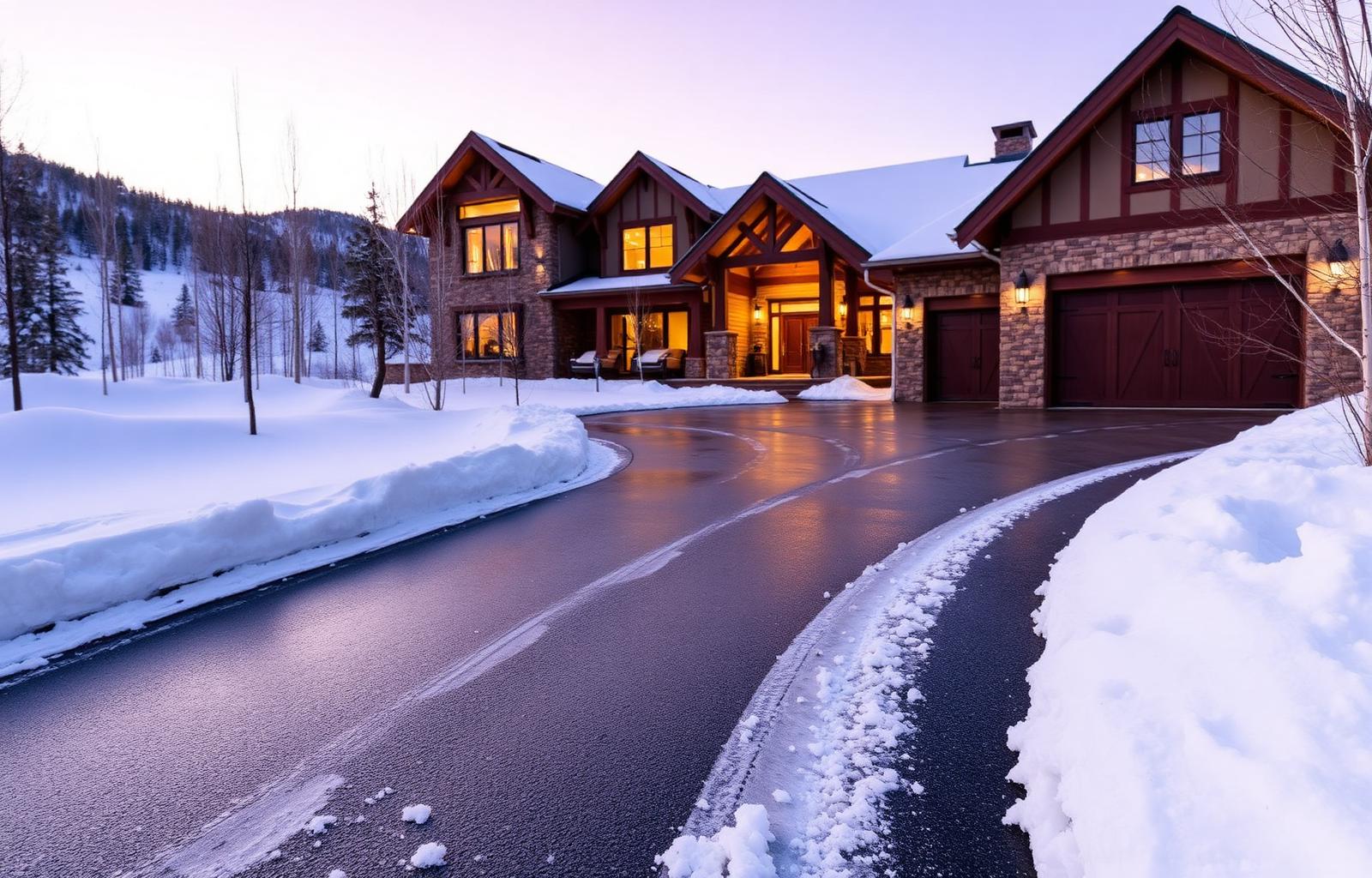
If you own a home in Park City, Deer Valley, or Heber, a heated driveway has stopped being a luxury and started being a feature buyers expect. With Park City averaging 350+ inches of snowfall a year and steep mountain driveways that ice over by November, a snow melt system pays you back in shoveling avoided, fewer chiropractor visits, and dramatically better resale.
Here's what they actually cost in 2026, what we'd install, and what to skip.
Hydronic vs. electric — pick your fuel
There are two main snow melt technologies. In Park City, the answer is almost always hydronic.
| Hydronic (PEX + boiler) | Electric (heat cable) | |
|---|---|---|
| Heat source | Natural gas / propane boiler with glycol loop | 240V resistance cable |
| Operating cost (Park City avg winter) | $80–$200/month | $400–$1,200/month |
| Best for | Whole driveways, large surfaces | Tire tracks, walkways, small areas |
| Install cost | Higher | Lower |
| Lifespan | 30–50 years | 15–25 years |
| Power needed | Boiler + circulation pump | Heavy electrical service upgrade |
For a typical Park City driveway over 600 sq ft, hydronic is dramatically cheaper to operate and the only system that makes economic sense.
Heated driveway cost in Park City — 2026 pricing
Per square foot of melted area, fully installed:
| System | 2026 cost / sq ft | Notes |
|---|---|---|
| Electric heat cable in new concrete | $14 – $22 | Fine for walkways, expensive to run |
| Hydronic in new concrete or asphalt | $16 – $28 | Standard Park City spec |
| Hydronic with boiler upgrade + controls | $22 – $38 | Whole-driveway, premium controls |
| Retrofit (overlay or sawcut existing slab) | $28 – $55 | Almost always cheaper to replace the slab |
Real Park City project sizes
- Two-car flat driveway (600 sq ft): $11,000 – $20,000
- Three-car + walkway (1,000 sq ft): $18,000 – $32,000
- Long mountain driveway (2,000–3,000 sq ft): $35,000 – $90,000
- Heated driveway + walkway + entry stoop bundled with new build: 15–25% cheaper per sq ft
These prices include PEX layout, glycol fill, manifold, boiler (or tie-in to existing high-efficiency unit), snow/temperature sensors, controls, slab tie-in, and Summit County permits.
What drives price up in Park City and Deer Valley
- Slope: anything over 8% needs heavier-duty PEX layout and more circuits.
- Boiler sizing: a dedicated snow melt boiler runs $4,500–$12,000. Tying into an existing high-efficiency residential boiler can save half that — but only works for smaller driveways.
- Snow load + freeze depth: Summit County requires deeper sub-base, which adds prep cost.
- Controls: an automatic precipitation + temperature sensor ($800–$2,500) is non-negotiable. Manual systems waste enormous amounts of fuel.
- Stamped concrete or pavers: pavers can be heated but require a sand/setting bed designed for it. Add 20–35%.
Operating cost — what it actually costs each winter
For a 1,000 sq ft hydronic system in Park City with a modulating high-efficiency boiler and smart controls, expect:
- Average winter (60+ snow events): $600 – $1,400 in propane/natural gas
- Heavy winter (90+ events): $1,200 – $2,200
- Daily storm cost: roughly $8 – $25 per snow event
Compare to:
- Plowing service contract: $1,800 – $4,500/winter
- Salt and labor wear on concrete (cracking, spalling): real long-term replacement cost
Most owners break even on operating cost vs. a plow service within 8–12 years on the labor avoidance alone — and the system is still fully functional.
ROI and resale in Park City
A heated driveway is one of the few exterior upgrades that shows up directly in Park City listing photos and MLS descriptions. Local real estate data suggests homes with heated driveways and walkways in Old Town, Deer Valley, and Promontory list and sell 2–5% faster, with appraisers commonly assigning $15,000–$35,000 in adjusted value for a fully heated driveway and entry path.
For high-end Deer Valley and Empire Pass homes, a heated driveway is essentially expected — its absence becomes a price negotiation point.
What we'd install (and what we'd skip)
Install:
- Hydronic PEX snow melt with a high-efficiency modulating boiler dedicated to snow melt
- Tekmar or Watts smart controls with slab + air sensors
- Heated apron at the garage door (the most slip-prone zone)
- Heated walkway from driveway to front door
Skip:
- Whole-yard heating
- Snow melt without a precipitation sensor
- Electric cable systems for anything over 300 sq ft in Park City (operating cost will horrify you)
- "Add-on" heated mats over existing concrete for permanent installs
Permits and timeline
Summit County requires permits for boiler installation, gas line, and electrical work. A typical install takes 3–6 weeks from contract to first snowstorm — but the install must be coordinated with concrete or paver placement, so plan during the April–September building season.
Planning a heated driveway in Park City, Deer Valley, or Heber? Alpha Wolf Construction installs hydronic snow melt systems across Summit and Wasatch counties. We'll spec the right boiler size, model your operating cost, and integrate the install with new concrete, pavers, or a full driveway rebuild.