Open-Concept Kitchen Remodel Utah: How to Remove a Wall (Safely)
May 13, 2026
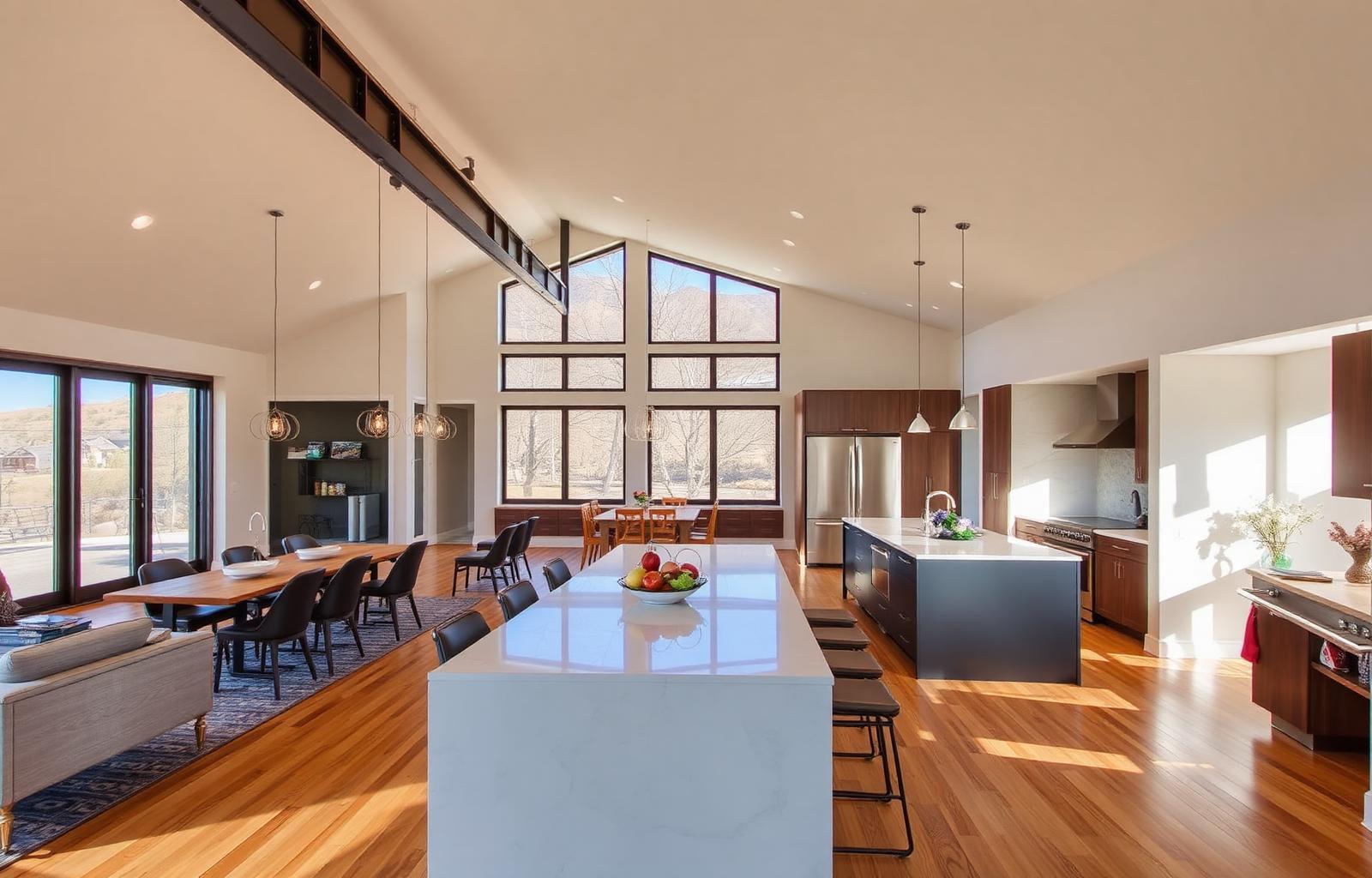
Removing the wall between your kitchen and family room is one of the most transformative things you can do to a 1960s–2000s Utah home. It can also be one of the most expensive surprises if you don't plan for what's actually inside that wall. Here's the full Utah-specific guide to going open-concept the right way.
Step 1: Figure out if it's load-bearing
In a typical Utah single-family home, the wall probably is load-bearing if:
- It runs perpendicular to the floor joists above
- It sits directly above a beam or interior foundation wall in the basement
- There's a second story, attic storage, or roof load directly above
- The wall is in the middle of the house, not on an exterior
It probably is not load-bearing if:
- It runs parallel to the floor joists
- It's a short partition wall with no structure above
- You can see it ends mid-room with no beam continuation
Don't guess. Have a licensed Utah structural engineer or experienced general contractor confirm with a quick site visit ($150–$400).
Step 2: Choose the beam
If it's load-bearing, you need a beam to carry the load to new posts on each end. The four main options:
LVL (Laminated Veneer Lumber) — the standard
- Engineered wood, sized by an engineer for the span
- 6–24 inches deep depending on span and load
- $1,200 – $4,500 for the beam itself; install $2,000 – $7,000
PSL or Glulam — for longer spans
- Stronger than LVL, used for 20+ ft spans
- More expensive but smaller depth for the same span
Steel beam (W-beam) — when you want flush ceiling
- Allows a flush-with-ceiling install (no soffit or dropped beam)
- $4,000 – $14,000 installed depending on size
- Heavy — usually requires a crew of 4+ to set
Flitch beam (steel sandwiched in wood)
- Compromise between LVL and steel
- Site-buildable, common in tight retrofits
Step 3: Plan for what's inside the wall
This is where Utah open-concept projects blow up budget. Almost every wall hides:
- HVAC ducts running to upstairs rooms — must be re-routed (often through soffits or a chase)
- Electrical: outlets, switches, possibly an entire branch circuit feeding the upstairs
- Plumbing: vent stacks especially common in kitchen-adjacent walls
- Low-voltage: cable, internet, alarm wires
- Gas line in some 1980s+ Utah builds
Every one of these has to be re-routed. Budget $3,000–$12,000 for utility relocation alone in addition to the beam install.
Step 4: Consider the floor
When two rooms become one, you'll see two flooring transitions, two ceiling heights (sometimes), and two paint colors. Plan to:
- Refinish or replace flooring across the new combined space
- Re-skim and re-paint the ceiling continuously
- Match (or intentionally contrast) trim and baseboards
Step 5: Permits in Utah
Removing a structural wall requires:
- Building permit (every Utah city)
- Engineered drawings stamped by a Utah-licensed structural engineer
- Inspections at framing/beam install (before drywall)
Permit fees range from $300 to $1,500 depending on city. Engineering: $500–$2,500.
DIY-permit avoidance is the #1 mistake we see. An unpermitted beam install will surface at resale during a home inspection, kill your sale, and cost more to fix retroactively than to permit properly the first time.
Step 6: Plan the new island and lighting
Once the wall is gone, your kitchen needs a new "anchor" — usually a large island. Plan:
- Island sized to the new combined room (often 8–12 ft)
- Pendants or chandeliers to define zones
- New recessed lighting layout for the entire combined space
- Outlets in the island (pop-up if it'll show)
- HVAC supply added to the new combined space — almost always undersized after combining
Realistic timeline
A wall-removal kitchen remodel in Utah typically takes:
- Engineering and permit: 2–5 weeks
- Construction: 6–12 weeks
- Total: 2–4 months
Realistic budget
For a typical 1960s–2000s Utah home, the wall-removal portion alone (beam + posts + utility relocation + drywall + finish) runs $8,000 – $25,000 on top of your kitchen remodel cost. Steel-beam flush installs and longer spans push higher.
When NOT to open the wall
- The kitchen is too small to absorb the new combined space (you'll feel exposed, not open)
- You actually use the formal dining room as a quiet retreat
- The beam needed is so large it would create a 24" soffit you'd hate forever
- The HVAC, plumbing, and structural relocations push the project past your budget for the kitchen itself
In those cases, a doorway widening or pass-through window can give you 60% of the open feel for 20% of the cost.
Considering an open-concept remodel in Utah? Alpha Wolf Construction handles structural wall removals, beam installs, and full kitchen renovations across the Wasatch Front. We coordinate engineering, permits, and construction under one contract.